



Russia’s elections are more than political theatre | Elections
Russia’s parliamentary elections offer an excellent opportunity for a new round in the information war between the West and Russia. Western politicians, experts and journalists have been given yet another convenient occasion to tell their target audiences that democracy has long ceased to exist in Russia; that the federal parliament, like any other representative body, in practice determines nothing in Russian life; and that all genuinely important decisions for the country are made not even by the government but exclusively in the Kremlin, by an extremely narrow circle of individuals accountable to no one.
Therefore, in the view of many critics of the Russian authorities, elections in Russia need not have been held at all: their outcome was predetermined by Kremlin political strategists and, in any event, will have no significant impact on the country’s future.
And yet even the most biased outside observer could hardly fail to notice the obvious: the Russian authorities made consistent and persistent efforts to ensure that these elections attracted the highest possible participation and were conducted successfully under current electoral law. For at least the past several months, the country had experienced heightened political activity.
Leading politicians and state officials constantly reminded the electorate of the importance of the coming elections. Governors of politically “problematic” regions were urgently allocated additional subsidies. Payments to certain categories of public-sector employees and pensioners were hastily indexed. And inevitable but unpopular or painful decisions for the public – for example, the forthcoming significant nationwide increase in housing and utility tariffs – were postponed until after the elections.
Even possible shifts in Russia’s position on the conflict with Ukraine and future relations with the West were often linked in public and political discussions to the results of the September elections, which were supposedly meant to “untie the hands” of the Russian leadership, although there were very different, sometimes diametrically opposed, views about how exactly the leadership would use these “untied hands”. In any case, it must be acknowledged that the Kremlin did not take the easy path of its opponents in Kyiv, who simply postponed the 2024 Ukrainian presidential election until better, “postwar” times, despite clear discontent and muted grumbling from part of Ukraine’s political class.
What is going on here? Why should the Kremlin invest so much energy and so many resources in what is often interpreted outside Russia as little more than an unconvincing simulation of genuine political competition? Why launch a new full electoral cycle while a large-scale military conflict has yet to end, when the normal boundaries of peacetime political democracy tend, one way or another, to narrow?
It is difficult to suppose that holding elections in Russia is driven solely by Kremlin strategists’ obsessive desire to impress, at all costs, either their external opponents or their partners abroad. As for the former, they would not change their views about the nature of the Russian political system, even in the hypothetical event that the elections ended in a complete triumph for the radical opposition and a crushing defeat for all pro-Kremlin candidates. Such a scenario would most likely lead to endless speculation about yet another “cunning Putin plan”, intended to mislead a credulous Western public and conceal the consistently authoritarian nature of Russia’s political regime.
As for the latter, it is hard to imagine that the leaders of Iran, North Korea, Belarus or China are seriously concerned about the state or future of Russian democracy. The political systems of their countries, like those of many other foreign friends and partners of Russia, to put it mildly, do not entirely conform to the classical standards of Western liberal democracies. It is doubtful that Kim Jong Un, Alexander Lukashenko or, say, Mohammed bin Salman, or even Donald Trump, would suddenly decide to offer Vladimir Putin wise advice on how to organise polling stations properly and count votes.
It is hardly likely that the Kremlin felt an urgent need to erect elaborate and expensive but not especially durable scenery on the Russian political stage when the reaction of the potential audience to the forthcoming theatrical production was known in advance. It seems more logical to assume that the Russian authorities need elections not as cosmetic decoration for the façade of their political system, designed to attract the indifferent gaze of an outside observer, but as a quite effective and, above all, much-needed mechanism for maintaining dialogue between the authorities and society in the difficult geopolitical and socio-economic conditions of autumn 2026.
First and foremost, the Russian authorities are fighting hard for a high turnout, creating the most comfortable possible conditions for their voters to cast their ballots. This is no accident. A high turnout is convincing evidence of the population’s continued political activity and of the fact that Russian society has not descended into political apathy and wholesale cynicism. The idea of active civic participation is far from an empty phrase for the country’s leadership. In this sense, even a vote against the main “party of power”, United Russia, is clearly preferable to the alternative of a significant part of the electorate conspicuously choosing not to participate in the elections.
No less important, the authorities need the election results as a barometer of current public preferences, something even the most accurate opinion polls or in-depth sociological research cannot replace. Contemporary Russia undoubtedly has its own, albeit relatively narrow, political spectrum of “systemic opposition” parties reflecting the differing interests and expectations of various social, economic, age and regional groups. The constantly changing balance of power between these parties must, one way or another, be taken into account by the authorities when determining the future priorities of their strategy.
For example, relative success for the Communist Party, A Just Russia and candidates from other left-wing parties would be a signal that the authorities should pay more attention to social programmes, the fight against economic inequality and social polarisation, and to countering the many remnants of “wild capitalism” left over from the 1990s. Conversely, a large number of votes cast for the New People party and other right-wing candidates would provide grounds for accelerating structural economic reforms and creating additional opportunities for the private sector, including small and medium-sized businesses. Strong electoral results for the Liberal Democratic Party would indicate growing nationalist tendencies in Russian society. The authorities may respond to such political signals in different ways, but they cannot ignore them and must therefore read shifts in public sentiment correctly.
Moreover, it can be assumed with a considerable degree of confidence that the State Duma elections will, one way or another, lead to substantial changes in the composition of not only the lower house of the Russian parliament but also Russia’s federal government. Following the elections, significant personnel changes are likely to take place in the executive branch – both at the federal level and at other levels. Such personnel changes, in turn, will make room for fresh ideas, innovative programmes, unconventional projects and proposals. There is a clear demand for renewal in Russian society today. Parliamentary elections are one way of responding convincingly to this demand without calling into question the stability of the state’s overall strategy or its senior leadership.
The Duma elections are the first parliamentary elections held during the special military operation, during which Russian society has changed considerably. In a sense, they can be called a large-scale political experiment whose outcome remains difficult to predict with precision. For example, it is still difficult to determine with confidence which political force will be supported by the majority of people who have participated in the special military operation or who remain on the line of contact. No less uncertainty remains regarding the likely political preferences of many residents of the new Russian regions, for whom the September elections will be their first State Duma election in their new status.
Such an experiment probably carries a degree of risk for the Russian leadership. Nevertheless, the leadership appears prepared to take that risk, not without reason viewing elections not only as an important but as an indispensable mechanism for public confirmation of its continuing political legitimacy.
The views expressed in this article are the author’s own and do not necessarily reflect Al Jazeera’s editorial stance.

Comedian Carrot Top, 61, rushed to hospital after emergency as Las Vegas show cancelled
CARROT Top has been hospitalised in Las Vegas after an emergency.
His Friday night show at the Luxor was scrapped as a result.
A source told TMZ Carrot Top, 61, had been rushed to hospital after a suicide attempt.
His rep said the comedian was recovering in hospital with “the care and support he needs”.
The performer’s real name is Scott Thompson.
He got his nickname from a high school swimming coach.

Known for his high-energy shows, Carrot Top had a long-running residency at the Luxor, Las Vegas.
The fast-paced performance has been running since 2005 at the ritzy hotel.
It regularly includes dozens of props and witty one-liners, with the star closing the show with a lip-synced musical montage.
Carrot Top booked his first stand-up comedy gig as a freshman at Florida Atlantic University.
Most read in Entertainment
The comedian from Rocklegde, Florida, got his big break in 1991 on Comic Strip live.
From 1995 to 1999, Carrot Top worked as a continuity announcer for Cartoon Network.
In the early 2000s, he landed TV roles in Larry the Cable Guy’s Christmas Spectacular, George Lopez, and Scrubs.
The comedian also snagged roles on the big screen, including in Chairman of the Board, Dennis the Menace Strikes Again and Tugger: The 4×4 Jeep Who Wanted to Fly.
He has appeared on many talk shows, including a 2010 episode of The Jay Leno Show, when he had pies chucked at him by Leno and guest Emma Roberts.
His agent Jami Schlicher said: “Mr. Thompson is recovering in the hospital and is receiving the care and support he needs.
“His family and those closest to him are deeply grateful for the concern, prayers and respectfully ask for privacy.”
The Sun contacted Scott Thompson’s agent for comment.

Brighton & Hove Albion news: Albion celebrate 125th anniversary
The contemporary Brighton are different.
They began their second European campaign in the Norwegian city of Tromso last month, knowing the Conference League offers the chance of that elusive first trophy.
They play in a magnificent stadium, a short train journey from the city centre, with its new corporate areas, and, generally, inclusive family atmosphere. Their recruitment model, buying players in and selling them on for vast profits, is envied. The new Brighton just beat Manchester United at Old Trafford for the fifth time in six visits. Four games into their 10th consecutive Premier League campaign, they sit fifth.
The contemporary Brighton exist the way they do largely because of the vision and investment of Tony Bloom.
Born in Brighton, Bloom is a lifelong fan. His connection to the club is through his grandfather Harry, a former vice-chairman, and uncle Ray, a director.
Bloom, 56, is an entrepreneur. He made his money in finance and gambling, largely through the use of data. He became chairman in 2009, and masterminded the rise from League One and move into the American Express Stadium. Last season, Brighton‘s average attendance was more than 31,000.
In their 125-year history, Brighton have never had it so good.
“Anyone walking into Brighton today compared to even 15 years ago would not think it was the same football club,” sporting director Mike Cave told BBC Sport.
“The club has been on an unbelievable journey. We’ve got staff members and many fans who have done that journey. For those of us who weren’t here 15 years ago, our responsibility is to ensure what’s to come – and I think there’s lots – is better than what’s happened in the recent or long-distance past.”
As for Bloom himself, he has reflected on Brighton‘s 125th birthday in the programme for the Arsenal game.
“Since 1901, this football club has been part of the fabric of our city and the broader county of Sussex,” he said.
“It has connected generations of families and communities. Grandparents have brought their children and grandchildren to matches. Lifelong friendships have been forged on terraces, in stands and on away trips.
“Through good times and bad, Brighton & Hove Albion has provided so many of us with some of the most memorable moments of our lives.
“This club is in my blood. Some of my earliest and most cherished memories are wrapped up in the sights and sounds of the Goldstone.
“When I had the privilege of becoming owner and chairman, it was like being entrusted with something precious to safeguard and help develop for the future.
“Many of you reading these words will remember those difficult years. The loss of the Goldstone. The long journeys to Gillingham. The challenges of the Withdean era.
“What got this football club through was the determination of its fans. The bucket collections. The protests. The refusal to accept the Albion should disappear. This anniversary belongs as much to those supporters as anyone. Quite simply, without them, we would not be here today.”
Whether they beat Arsenal or not, Brighton stands tall, for those who fought to preserve something they felt was special, and a man who had a vision – and finance – to build something better.

Brentford beat Chelsea 3-0 to shatter Alonso’s London honeymoon | Football
Chelsea left with one point from their last three Premier League games after a 3-0 defeat at neighbours Brentford.
Published On 19 Sep 2026
Brentford exposed Chelsea’s defensive problems to inflict a damaging 3-0 defeat that gives Xabi Alonso plenty to ponder during a three-week international break.
After a promising start to life under the former Real Madrid coach, Chelsea have picked up just one point from their last three league games.
Recommended Stories
list of 4 itemsend of list
Goals from Jaidon Anthony, Igor Thiago and Fabio Carvalho took unbeaten Brentford above their west London neighbours late on Friday and up to third in the table.
“I have this unbelievable calm around that team because I trust them. It’s nice to see it come to fruition,” said Brentford boss Keith Andrews.
Chelsea had quickly earned the reputation as the Premier League’s great entertainers under Alonso, with their opening four games containing 19 goals.
But the loss of Joao Pedro to a knee injury subdued the Blues’ free-flowing attack as Cole Palmer and Morgan Rogers were comfortably kept in check by the Bees.
“At the moment we are not being consistent enough to compete during the whole game,” said Alonso.
“It’s about everything. It’s about the mentality. It’s about football, tactical things that we need to keep improving that we can do much better.”
Alonso said after last weekend’s 2-2 draw against Hull, he was hoping for more “boring” games going forward.
The Spaniard sought control as he made four changes in all, handing Jordan Henderson his first Chelsea start against the 36-year-old’s former club.
Alonso got his wish during a flat first half in which neither goalkeeper was seriously tested, but Brentford were the more threatening side in the second period.
The visitors’ frailty from set-pieces led to the opening goal when Jannick Schuster rose highest to meet Mikkel Damsgaard’s corner, and Anthony was left with a simple task to head into an unguarded net just after the hour mark.
Chelsea’s response was muted, and as they pushed forward in search of an equaliser, Alonso’s men were picked off on the counterattack.
Kevin Schade should have scored the second goal himself when played clean through on Emi Martinez.
But even after the Argentinian goalkeeper spread himself to save, the rebound fell kindly for Thiago to end his goal drought.
The Brazilian netted 25 times last season, earning a shock call-up to Carlo Ancelotti’s World Cup squad as a result.
Thiago has looked shorn of confidence in the early weeks of the campaign and tore off his shirt in celebration after netting for the first time in the Premier League this season.
Chelsea have conceded at least twice in all five league games under Alonso, and there was further punishment to come in stoppage time.
Schade’s low cross was deflected into the path of Carvalho, who fired high past Martinez to leave Andrews yelling into the night sky in delight.
Brentford, who also beat Tottenham 3-0 on the opening weekend of the season, sit behind only defending champions Arsenal and Manchester City at the top of the table.
By contrast, Chelsea were handed another reminder of the gap Alonso must bridge to make them title contenders once more.
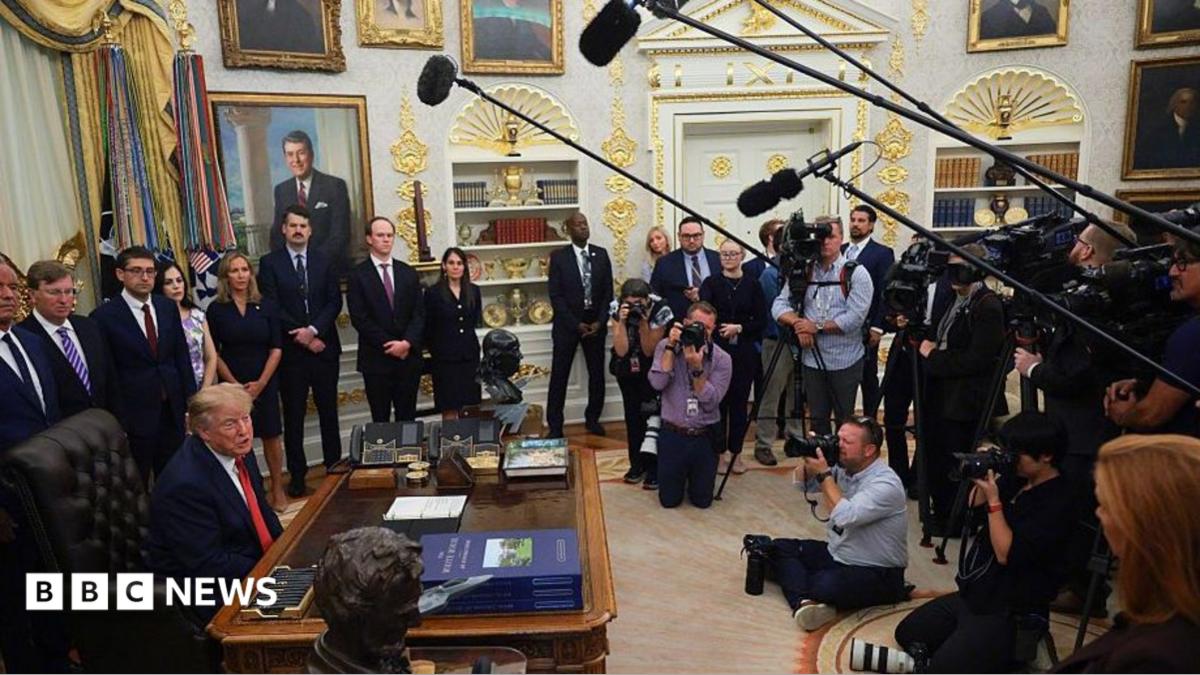
Trump says he is banning CNN, Politico and MS NOW from White House
Since returning to office in January 2025, Trump and administration officials have repeatedly clashed with members of the White House press corps. In his second term, Trump has also moved to bring conservative bloggers, influencers and other media into the press room, arguing it is necessary to provide diverse perspectives to the American public.
In February, the White House announced it was taking control of the press pool which has access to Trump and had for more than a century been managed by the White House Correspondents’ Association.
The same month, the administration moved to bar Associated Press (AP) reporters and photographers from spaces where access is limited, such as the Oval Office or Air Force One, because of the outlet’s usage of the term “Gulf of Mexico” instead of “Gulf of America”.
AP swiftly filed a lawsuit and the case remains ongoing.
The president has frequently clashed with reporters in the Oval Office on Air Force One and during White House events, often referring to them as “fake news” and “rude”.
In his first term, Trump also banned CNN correspondent Jim Acosta from the White House, although his credentials were restored after CNN sued.
CNN is one of only five US news outlets that film video for the pool. The pool refers to an outlet or reporter sharing material from a presidential event with other media outlets. The BBC contributes to the White House radio pool.
The announcement was immediately criticised by leading advocacy organisations for freedom of the press.
In a statement on Friday afternoon, the Knight First Amendment Institute at Columbia University said that “with so many courts having ruled against him on exactly this point, you’d think President Trump would have learned this lesson by now”.
“If President Trump means to expel these news organizations from the White House press pool, his action is doubly unconstitutional because the press pool is a ‘public forum’ under the First Amendment, which means the president can’t exclude journalists from it on the basis of their viewpoints,” said the institute’s executive director, Jameel Jaffer.
A major group that provides legal services to the media – the Reporters Committee for Freedom of the Press – said it expected Trump’s ban to be struck down quickly by the courts because it was “flatly unconstitutional”.
“The First Amendment is clear that once the White House invites in some journalists, it can’t ban others because it doesn’t like their reporting,” said the group’s president Bruce Brown, calling the potential ban “textbook viewpoint discrimination”.
The Freedom of the Press Foundation also said it was illegal, adding: “It’s also hard to imagine a dumber move”.
Trump “has been retaliating against the press for years, but it hasn’t helped him,” it said, saying “these outrageous attacks only demonstrate how scared he is of an informed public”.
Trump has pursued legal action against a number of US and international news outlets, including The Wall Street Journal, The New York Times and the BBC.
Some of the lawsuits have resulted in media organisations agreeing to pay multimillion dollar settlements. Trump’s lawsuit against the BBC is ongoing.
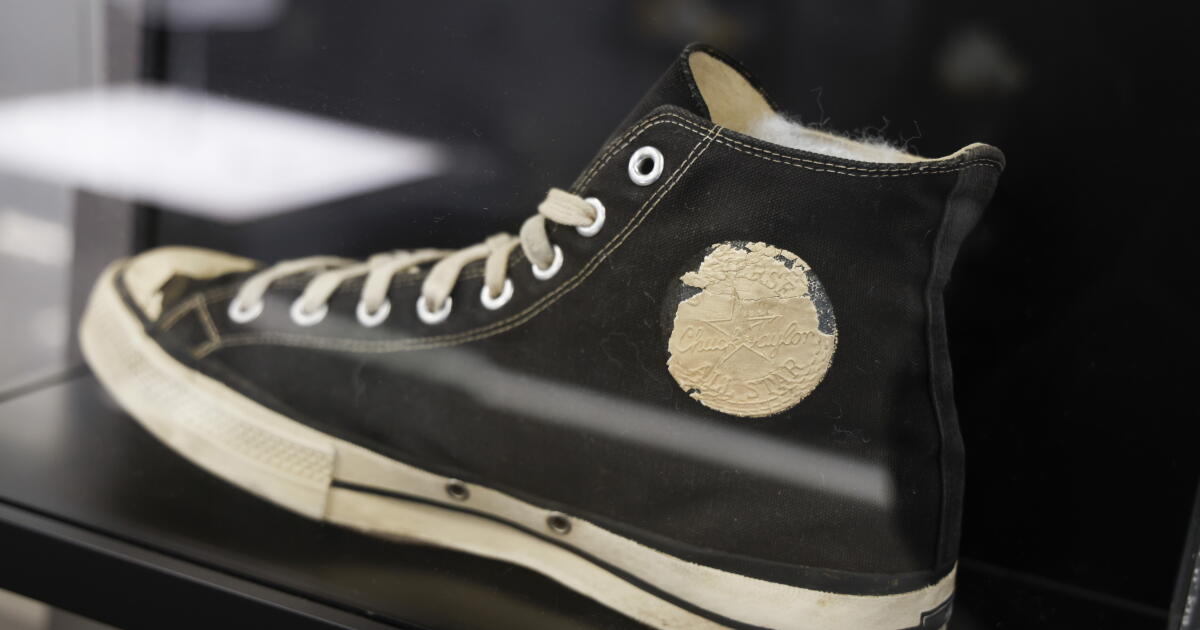
Converse apologizes after ad is slammed for imagery likened to KKK
Converse has pulled a controversial ad after it was slammed online by social media users who said it evoked Ku Klux Klan imagery.
Two ads promoting Converse’s global Chuck 70 X campaign came under fire. One featured K-pop star Karina clutching a pair of the brand’s classic high-top black sneakers by her side and wearing a white skirt, with a star spotlight in center frame.
The problem, according to social media users, was that the lighting and cropping created an outline that evoked a white pointed hood, with the shoes dangling against it. The other image showed models climbing a ladder to reach shoes that hung from a tree branch.
“We’re sorry. We understand why this image is deeply upsetting and recognize that we got this wrong,” Converse said in a statement to Footwear News on Friday. “We removed it from our channels and are working to remove it everywhere it appeared. This should not have happened, and we will do better.”
Photographer Stephanie Schwartz posted on Threads that she thought the imagery was no accident.
“Shadow, light, and composition. Every photographer can tell you, whoever did this ad knew EXACTLY what they were doing,” she wrote.
Educator Kendall C. Peacock posted a video on Instagram asking followers whether a boycott of the brand was warranted.
“Converse, converse, converse! You’ve been called to the carpet. Who approved this? … As a Black man and someone who loves Converse shoes, I find this very insensitive and distasteful.”
“How and why did nobody question these visuals?” he continued. “Deliberate racist intent hasn’t been established yet, but that doesn’t erase the impact.”
Peacock acknowledged the sneaker brand’s apology, but added that “must come with accountability.” He asked who approved the ad and what will change after its removal, and further suggested that “withholding our dollars is a reasonable demand for answers … How dare you try to make a dollar off of Black pain, Converse?”
DJ SoulChild AC said on TikTok that even if it wasn’t Converse’s intention, “We can see the symbolism from a mile away.”
“That is a depiction of the triple K right there,” he continued. “Pointed hood, dangling converses, as if someone’s being strung up … Black people ain’t stupid, bro.”
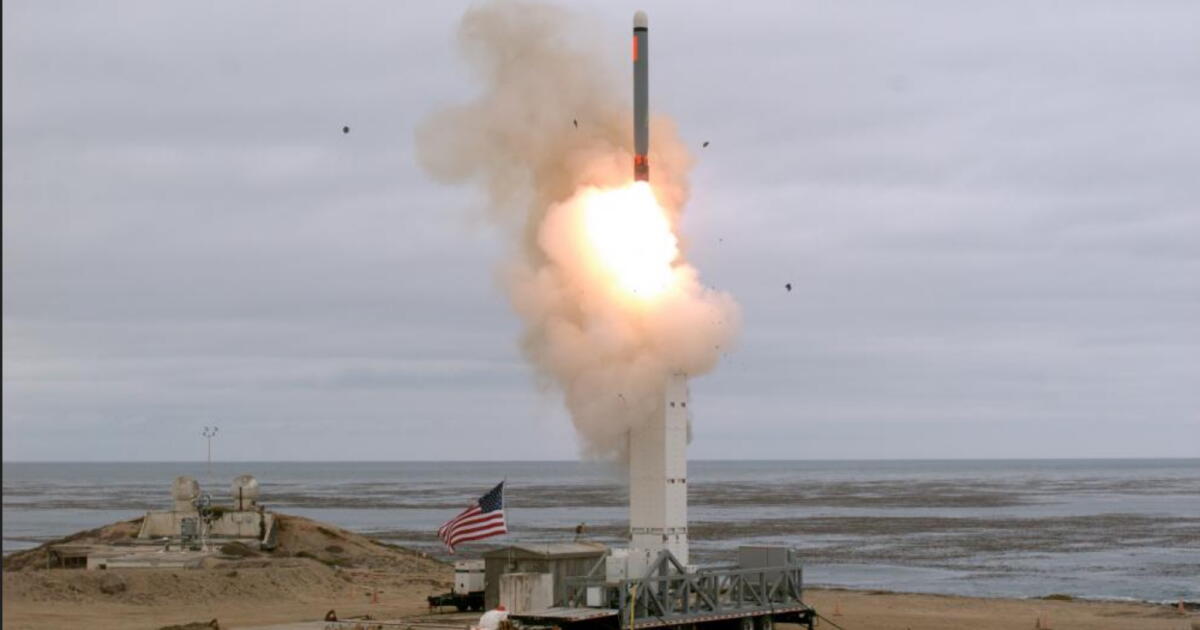
U.S. seeks to base missiles in Pacific. Some allies say no.
WASHINGTON — The governor of a Japanese territory where the Pentagon is thinking about basing missiles capable of threatening China has a message for the United States: Not on my island.
“I firmly oppose the idea,” said Gov. Denny Tamaki, the governor of Okinawa, in an email to The Times.
Officials in other Asian countries are also signaling they don’t want them.
But Pentagon planners aren’t backing down after the Trump administration withdrew last year from a 33-year-old arms control treaty that barred U.S. land-based intermediate-range missiles in Asia.
Senior officials now say that putting hundreds of American missiles with nonnuclear warheads in Asia would quickly and cheaply shift the balance of power in the western Pacific back in the United States’ favor amid growing Pentagon concern that China’s expanding arsenal of missiles and other military capabilities threaten U.S. bases in the region and have emboldened Beijing to menace U.S. allies in Asia.
The missile plan is the centerpiece of a planned buildup of U.S. military power in Asia projected to consume tens of billions of dollars in the defense budget over the next decade, a major shift in Pentagon spending priorities away from the Middle East.
But it also highlights the complex relationship between the U.S and its Asian allies, many of whom feel increasingly threatened by China but are reluctant to back new U.S. military measures that might provoke Beijing, which has built the biggest navy in the world in the last decade.
Australia and the Philippines publicly ruled out hosting American missiles when the Trump administration first floated the idea last year. South Korea is also considered an unlikely location, current and former officials say.
In Japan, the decision on whether to allow U.S. missiles on its territory will be made by the central government in Tokyo. Gov. Tamaki said officials at the Pentagon and in Tokyo have told him there are no definite plans to put missiles on Okinawa. But Tamaki isn’t reassured.
With a Japanese mother and an American father who served with the Marines on Okinawa before abandoning the family, Tamaki personifies the complex relationship between the U.S. and its allies in Asia. He was elected two years ago after pledging to oppose expansion of the already-substantial U.S. military presence on the island.
More than half of the 50,000 U.S. military personnel stationed in Japan are in Okinawa, most concentrated at a Marine base surrounded by residential areas in the largest city. Opposition to the 70-year-old U.S. military presence has sparked local protests for years, which would probably intensify if there were a move to base missiles there.
“If there is such a plan, I can easily imagine fierce opposition from Okinawa residents,” Tamaki said.
For the last year, the Pentagon has been testing several new types of short- and intermediate-range missiles — those with ranges up to 3,400 miles — including a ballistic missile that could be placed in Guam, a U.S. territory, and mobile missiles carried on trucks.
The first of the new weapons could be in operation within two years, though no decision has been announced about where they will be based. Similar missiles are now carried on U.S. warships and planes based in Asia, but there are no land-based systems.
U.S. officials say that many allies are privately supportive of the missile plan and may come around to permitting them on their territory but don’t want to provoke opposition from Beijing and their own public before decisions are on the table.
The U.S. has a defense treaty with Japan, as it does with South Korea, the Philippines and Australia. Taiwan is not a formal ally but has close, unofficial defense ties with Washington.
“We are very attentive to our allies’ concerns, and we recognized their political challenges,” said a senior defense official, who agreed to discuss Pentagon planning if he was not identified. “Everything that’s said in the media is not necessarily what’s said behind closed doors.”
To lessen the political opposition, the U.S. could rotate missile batteries in and out of locations around the region or place them in strategic locations without publicly disclosing it.
“It wouldn’t make much sense to announce plans now, which would stoke Chinese anger and possibly play into the domestic politics,” said Randy Schriver, who was a senior Pentagon official responsible for Asia until his resignation last year.
A decision to go ahead in Asia would intensify an arms race between the region’s two biggest powers whose relations — already tense over President Trump’s confrontational trade agenda and Chinese President Xi Jinping’s hawkish policies — have nosedived since the coronavirus outbreak.
“It’s naïve and dangerous,” said Alexandra Bell, a former Obama administration arms control official and a critic of deploying U.S. missiles. “Instead of looking at how we can prevent a full-out arms race, that’s our opening salvo?” added Bell, a senior policy director at the Center for Arms Control and Nonproliferation in Washington.
Putting land-based missiles in Asia capable of attacking China is not a new strategy.
In the 1950s and 1960s, the U.S. kept them at bases across the region, including in Okinawa, where hundreds of nuclear-armed warheads were stored secretly for decades even though Japan’s constitution prohibited the presence of nuclear weapons on its territory.
The missiles were gradually taken out of service in the 1960s and 1970s, because of budget cuts and a shift in U.S. strategy away from defense of the region focused on nuclear weapons. In 1987, the Reagan administration signed an arms control treaty that prohibited the U.S. and the Soviet Union (and later Russia) from deploying any land-based intermediate range missiles, including in Asia.
China was not a signatory, leaving it free to build up its missile arsenal.
The Trump administration withdrew from the treaty last year after accusing Russia of developing new land-based missiles that violated its terms. The exit opened the way for the Pentagon to consider reintroducing ground-launched missiles in Asia.
With mobile missiles around the region, the U.S. could pose an even bigger challenge for China, forcing it to hunt for hundreds of launchers capable of targeting its planes, ships and bases, strategists say.
“Ground-based missiles aren’t some kind silver bullet,” said Eric Sayers, a former consultant to U.S. commanders in the Pacific and a fellow at the Center for a New American Security, a Washington think tank. “But they are a way in the near term … to create dilemmas for the [People’s Liberation Army] planners.”
Although the risk of large-scale conflict with China seems low, tensions have continued to ratchet up over Beijing’s crackdown in Hong Kong, its military maneuvers near Taiwan, its border dispute with India and its offshore maritime claims in the East China Sea and South China Sea.
Nearly a quarter of world trade travels through the South China Sea, making the contest between Beijing and Washington over control of its maritime lanes and rich resources especially tense and certain to continue, no matter who wins the U.S. presidential election in November.
The U.S. Navy for decades dominated the “first island chain,” as strategists call the area of the western Pacific stretching from Japan to Taiwan to the Philippines that fell within America’s defense umbrella after World War II.
But American reliance on bases, warships and airfields in the region has become increasingly risky, officials and analysts say.
China has developed its own missiles, sophisticated radars and anti-satellite weapons as well as a growing fleet of warships and submarines in recent decades that could threaten American bases and other targets early in a conflict, said Collin Koh, a research fellow in Asian maritime security at the S. Rajatnam School of International Studies in Singapore.
China’s People’s Liberation Army can project significant firepower on U.S. and allied military installations in the western Pacific and “threaten to overwhelm” American forces “in times of armed conflict,” Koh said.
The Chinese weapons in many cases have ranges that exceed those on U.S. warships, though the U.S. retains a significant advantage in attack submarines and in advanced fighters and bombers armed with cruise missiles that can be fired from long distances.
“Their capability and their reach have created vulnerabilities for our legacy basing structure,” said the defense official, who agreed to discuss U.S. planning on condition that he not be identified.

Flex your football brain with our daily quizzes
Test your ball knowledge against today’s Who Am I?, Five in Five and Brainteaser.
Source link

Brazilian police capture suspected serial killer disguised as a woman | Newsfeed
Brazilian police say they will reopen dozens of cases after they arrested a self-confessed serial killer disguised as a woman. Jorlan Lopes da Silva, 33, confessed to 80 murders after he was arrested in Paraiba State in the country’s north east, trying to flee in a wig and holding a baby.
Published On 19 Sep 2026

The Papers: 'Monstrous words' and 'Russia to ramp up war'
The fallout from Earl Spencer’s book about Princess Diana leads most papers on Saturday.
Source link

Kate Moss’ nepo-baby daughter Lila ‘totally ignored’ by other models and is ‘given ‘opposite’ of special treatment
LILA Moss stole the show at H&M’s London Fashion Week show.
The star proved the apple doesn’t fall far from the tree as she followed in her mum Kate Moss’s heeled footsteps and took to the runway.
I’m told despite being one of the biggest names at the event and being the daughter of an industry legend, Lila refused to have any special treatment.
In fact, sources tell me Lila has secretly been battling vile treatment at shows over the past year due to her nepo-baby status.
She’s told pals how she has been given “icy treatment or totally ignored” behind the scenes as she battles to carve out a career in her own right.
A source said: “Lila was booked in the standard way, just like all the other models.


“She didn’t ask for any special treatment due to her status—in fact, it’s the opposite.
“Over the past year, she’s confided in pals that many other models give her the cold shoulder or totally ignore her altogether.
“She’s not said these words, but essentially it’s jealousy—people judge her and brand her a nepo before they have even met her.
“Yes, being Kate’s daughter has opened a lot of doors, but Lila wants to be successful in her own right.
“There have been many times over the years where backstage she is left all on her own.”
Lila is the daughter of Kate Moss and magazine editor Jefferson Hack.
In 2018, she was snapped up by Marc Jacobs to front his Marc Jacobs Beauty range.
In 2021, she made her Fashion Week debut by walking for Miu Miu at Paris Fashion Week.
Speaking in 2022, Lila admitted her mum tried to put her off modelling.
She told British Vogue: “My mum always put me off.
“She was always like, ‘If you wanna do it, you can, but I wouldn’t recommend it’.
“When I was younger, she was scared that I’d fall into the same trap, I think.”
Kate has previously spoken candidly about the pressures of being a model.
She told Vanity Fair in 2012: “Nobody takes care of you mentally.
“There’s a massive pressure to do what you have to do.”

Newsom rejects roll back of CEQA exemptions for advanced manufacturing
Gov. Gavin Newsom on Friday vetoed legislation that would have narrowed exemptions to the California Environmental Quality Act for advanced manufacturing facilities amid pushback from business and industry groups.
Senate Bill 954 from state Sen. Catherine Blakespear (D-Encinitas) would have rolled back parts of last year’s controversial overhaul of CEQA, which fast-tracked approvals for a broad array of housing and infrastructure projects in an effort to ease new construction in the state.
Critics said the overhaul opened up a path for advanced manufacturing facilities such as strip miners, chemical producers, battery recyclers and semiconductor plants to open in communities without any environmental review. Dozens of environmental groups including the Sierra Club, the Natural Resources Defense Council and California Environmental Voters urged the governor to sign the legislation into law, arguing that it would have provided essential protections for communities that already experience the worst pollution from industrial facilities.
In his veto message, Newsom said last year’s CEQA reform was a “long overdue overhaul to get California building again.”
“While I appreciate the author’s stated intent to ensure these reforms do not result in unintended adverse impacts on the environment, this bill does not merely clarify or refine the existing exemption. It repeals the CEQA exemption for advanced manufacturing facilities,” the governor wrote. “Further, the bill’s numerous new siting, operational, and emissions requirements would make the narrower exemption impractical for many of the projects it was intended to support.”
In a statement, Blakespear said she was “disappointed” in the governor’s decision. While some of the new CEQA exemptions are important to stimulate construction, the recent near-miss chemical disaster in Garden Grove — which prompted thousands of evacuations in May —illustrates the danger that can come from siting advanced manufacturing facilities in communities, she said.
“We should not have to wait for another emergency before recognizing that sweeping — and rushed — exemptions from environmental review need reasonable guardrails,” Blakespear said. “Protecting communities and workers is not an impediment to economic growth; it is part of responsible growth. We need guardrails to these CEQA exemptions to safeguard Californians and ensure the environment isn’t damaged.”
Newsom’s veto came amid pushback from industry groups and prominent business organizations including the California Chamber of Commerce and the California Manufacturers & Technology Assn. The California Department of Finance also was opposed to the bill, which it described in an analysis as “inconsistent with Administration policy.”
Lance Hastings, chief executive of the California Manufacturers & Technology Assn., said in a statement Friday that the governor’s veto protects “the ability of manufacturers to innovate and create here in California.”
Manufacturing generates $382 billion a year for California and supports 1.24 million jobs, he said.
But opponents said Newsom’s decision will ultimately endanger communities and leave more people exposed to industrial hazards.
“Frontline communities across California continue to face consequences from polluting industries that have damaged our air, and water for the sake of corporate profit,” said Asha Sharma, deputy director at the nonprofit Sierra Club California. “SB 954 was developed to ensure those same mistakes do not continue.”
Blakespear said she will continue working on the issue next year.

Premier League: Xabi Alonso post-match interview – Brentford 3-0 Chelsea
Chelsea manager Xabi Alonso says everything about his side’s performance in their loss at Brentford was “disappointing”, stressing that they need to improve in every aspect of their game.
MATCH REPORT: Premier League – Brentford 3-0 Chelsea
Available to UK users only.
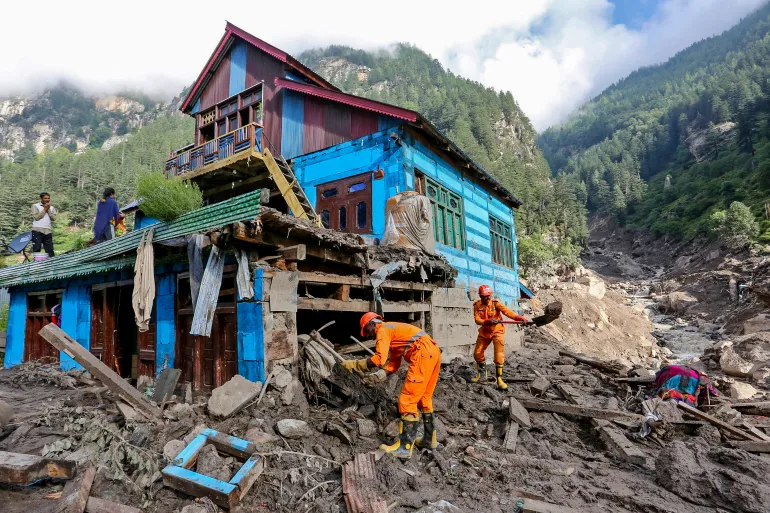
The Nepal floods question: When the Himalayas collapse, who gets warned? | Climate Crisis News
New Delhi, India – On the morning of August 26, the Himalayan landscape above Nepal’s Rasuwa district changed in minutes.
A mass of ice and rock broke loose high in the mountains and sent a violent surge of water, mud and debris down the Lhende Khola River. The torrent travelled through valleys, swept away settlements and infrastructure and eventually reached the Nepal-China border.
What followed was not simply a flood.
It was a chain reaction.
By mid-September, more than 1,400 people had been reported dead and at least 6,000 remained missing in Nepal and across the border in Tibet. Twelve hydropower plants were destroyed, while roads, bridges and homes were buried or washed away.
The scale of the destruction has left scientists and disaster managers confronting a difficult question: How do you warn communities about a disaster whose trigger may occur high above them, in terrain that is difficult to monitor and where there may be only minutes to react?
Basanta Raj Adhikari, director of the Centre for Disaster Studies at Tribhuvan University in Kathmandu, described the event to Al Jazeera as unprecedented in size, affected area and mechanism. His estimate suggested that the energy involved was greater than that released by the Hiroshima atomic bomb, a comparison intended to illustrate the scale of the physical forces involved rather than suggest that the event was equivalent to a nuclear explosion.
For scientists who study the Himalayas, the disaster demonstrated how quickly an event originating in a remote, high-altitude environment can become a regional catastrophe.
And Nepal is not alone.
The warning problem
A warming climate is altering glaciers, snow cover, permafrost and high-altitude lakes. At the same time, roads, hydropower projects, tourist facilities and settlements have pushed deeper into mountain valleys.
That combination is creating a new risk landscape in which one hazard can trigger another.
An avalanche can block a river. A blocked river can form a temporary lake. A sudden release can become a debris flow. That debris can destroy a road or bridge, block another river and create another flood downstream.
The August disaster in Nepal showed how quickly such a sequence can unfold. It also exposed a weakness in the way early-warning systems are often designed.
Many systems are built around a particular hazard: rainfall, river level or glacial lake outburst flood. But the Himalayas do not always respect those categories.
In July, the International Centre for Integrated Mountain Development, or ICIMOD, warned that a below-normal monsoon should not be interpreted as a safer one.
“The biggest misunderstanding is that less seasonal rainfall means lower flood risk,” said Saswata Sanyal, a disaster risk reduction specialist at ICIMOD.
“A drier monsoon can still be a dangerous monsoon,” he added, warning that seasonal averages cannot capture the cloudbursts capable of producing catastrophic flooding in mountain valleys.
The Nepal disaster went a step further.
The immediate trigger was not simply heavy rainfall.
Scientists have been examining an ice-rock avalanche and other possible processes that temporarily obstructed the river system before releasing a destructive surge. ICIMOD has described the event as an ice avalanche rather than a conventional glacial lake outburst flood, while other scientists have examined the role of local seismic activity and other high-altitude processes.
That distinction matters.
A warning system waiting for rainfall or a rising river may not provide enough time when the real trigger happens several kilometres upstream and above the line of sight of the communities below.
![Indian National Disaster Response Force (NDRF) personnel conduct a search and rescue operation at the site of a flash flood at a village in the Kishtwar district of Indian-administered Kashmir on August 16, 2025 [AFP]](https://i0.wp.com/occasionaldigest.com/wp-content/uploads/2026/09/afp_68aac36f5150-1756021615.jpg?w=640&ssl=1)
Kashmir’s warning signs
Thousands of kilometres away, scientists studying Kashmir’s Himalayas are seeing another part of the same problem.
A study published in the Journal of Glaciology this year mapped 155 glacial lakes above 2,500 metres (8,200ft) across the Himalayas in Indian-administered Kashmir.
The researchers found that the area of ice-contact proglacial lakes – bodies of water that form directly against the margin of a melting glacier, trapped by moraine ridges, bedrock basins, or ice dams – had increased by 26 percent between 1992 and 2024.
Five lakes were classified as having very high susceptibility to glacial lake outburst floods.
An outburst from those lakes, the researchers found, could threaten several thousand buildings, 15 major bridges, roads and a hydropower project.
More significantly, the study warned that hazards could occur in chains, with an upstream lake outburst potentially triggering secondary events downstream.
For Irfan Rashid, a glaciologist and associate professor at the University of Kashmir who co-authored the study, the implications extend beyond individual lakes.
Rashid recently told Al Jazeera that without action, the melting, thinning, and destabilisation of glaciers, seasonal snow cover, and permafrost along the Hindu Kush-Himalayas system would increase, and water shortages could become a major problem across the Upper Indus, Ganga and Brahmaputra basins by the end of the century.
That is why the Nepal disaster resonates in Kashmir.
The landscapes are different, the rivers are different and the individual hazards may differ. But the underlying problem is increasingly similar: Communities living downstream of a rapidly changing high-altitude environment may have little time to respond when something breaks loose above them.
The challenge is particularly acute in places where roads, bridges and hydropower projects occupy narrow valleys.
Once a mountain river begins carrying enormous quantities of rock, ice and mud, infrastructure designed for conventional floods can quickly become irrelevant.

Pakistan has already begun building a warning network
The same concern runs across the western Himalayas and Karakoram ranges.
The Gilgit-Baltistan region in Pakistan-administered Kashmir contains hundreds of glaciers and glacial lakes, while communities and infrastructure sit along valleys exposed to sudden floods and landslides.
Pakistan has responded by expanding early-warning infrastructure.
Under a United Nations-supported programme, early-warning systems, evacuation shelters, disaster-management centres and other protective measures have been established in vulnerable valleys.
But technology alone cannot solve the problem. A sensor can detect a change. Someone still has to receive the message. Someone has to understand what it means. And people downstream have to have a route to safety.
That last part is often the weakest link. A siren is useful only if the people hearing it know where to go. An automatic warning is useful only if it arrives before the flood. A satellite image is useful only if the information can be converted into a decision quickly enough to save lives.
This is why disaster scientists increasingly talk about anticipatory action rather than simply disaster response.
“The era of preparing for a single, predictable hazard is over,” Sanyal said earlier this year. “Anticipatory action and early warning must now be the foundation.”

The infrastructure trap
The Himalayas are also becoming more heavily engineered.
Hydropower is central to Nepal’s economy. Roads are being expanded. Border crossings are growing in importance. Tourism is pushing deeper into remote valleys.
The benefits are obvious. So are the risks.
The August disaster struck an area where hydropower infrastructure was concentrated along the river corridor. At least 900 workers were believed to have been inside tunnels and other facilities in the aftermath, making rescue operations extraordinarily difficult. Two workers were eventually pulled alive from a hydropower tunnel nine days after the disaster.
The question is no longer simply whether infrastructure can withstand a flood. It is whether planners have adequately considered what happens when a flood is carrying an enormous mass of rock and ice, when a river changes course, or when one mountain hazard triggers another.
For decades, engineering risk assessments have often relied on historical records. But history becomes a less reliable guide when the physical conditions producing disasters are changing.
A river that flooded once every several decades may no longer behave according to the same pattern. A glacier that appeared stable from satellite imagery may sit beneath an increasingly unstable slope. A lake that was considered remote may suddenly become a threat to a road, village or power plant hundreds of metres below.

The border problem
There is another complication that no satellite can solve on its own.
Borders.
The Himalayas are divided among countries with different political systems, security concerns and approaches to sharing information. But rivers do not stop at international boundaries. Neither do floods.
The August disaster reached the Nepal-China border and damaged the Gyirong crossing, an important trade and pilgrimage route. The disaster also raised questions about how quickly information about hazards in high mountain areas can move between countries.
This is where regional cooperation becomes more than a diplomatic slogan, experts say. A sensor positioned in one country can provide warning to people in another. A satellite image collected over one mountain range can reveal a developing hazard that threatens a valley downstream. A river gauge can provide critical information before floodwaters reach a settlement.
The technical capability already exists in many cases. The missing piece is often the architecture connecting it.
A 2026 assessment of Himalayan disaster risks has argued for stronger monitoring, early-warning systems and regional coordination because hazards are increasingly interconnected.
The idea is simple: Information about a mountain hazard should not stop at the same line where a political boundary begins.

From Nepal to Sikkim to Kashmir
The August disaster in Nepal isn’t a tragedy belonging to one country, point out experts.
The Kashmir Himalayas study has already identified lakes capable of producing destructive outburst floods and has warned of cascading processes.
Northeast India’s Sikkim provides another example.
After the 2023 South Lhonak glacial lake outburst flood killed dozens and damaged major infrastructure, India expanded monitoring and mitigation efforts.
Today, 40 high-risk glacial lakes have been identified in Sikkim, including 16 placed in the highest-risk category, with authorities working on drainage, flood-retention and other protective measures.
But the lesson from each disaster is broadly the same: Waiting for a disaster to prove the risk is the most expensive form of preparedness.

The Third Pole test
The Himalayas are sometimes called the Third Pole because they contain one of the world’s largest concentrations of snow and ice outside the Arctic and Antarctic.
Major Asian rivers depend on water originating in these mountains. Hundreds of millions of people live downstream.
That makes the changing Himalayas not only an environmental issue but a security, infrastructure and humanitarian one.
The August disaster demonstrated the most frightening version of that future. A mountain can collapse without warning. A river can become a weapon of debris. A hydropower tunnel can become a trap. A border crossing can disappear in minutes. And by the time people downstream understand what is happening, the water may already be there.
It’s a future that a region stretching from northeast India, spanning Tibet, Nepal, Kashmir and Pakistan, can no longer ignore. Yet disaster management remains largely divided by national boundaries. That contradiction is becoming harder to navigate.
The next glacial collapse could begin in Kashmir. It could begin in Pakistan’s high mountains. It could begin in Sikkim, Nepal or Tibet.
Wherever it starts, the same question will follow the mountain downstream: Who knew, how early did they know, and did the warning reach the people in time?
For a region entering an era of increasingly complex mountain hazards, that may be the real measure of whether the Third Pole is prepared.

German Forces Surge Onto Baltic Island In First-Of-Its-Kind NATO Drill
Swedish and German forces are conducting what appears to be the first joint rehearsal of their rapid-reinforcement plans for the Baltic island of Gotland. The exercise is another step in Sweden’s defense planning for an island whose position in the middle of the Baltic gives it an outsized strategic importance for controlling access, protecting the Baltic states, and maintaining NATO’s freedom of movement in a region where Russian military activity remains a persistent concern.

The exercise, Silver Wotan 2026, running between September 14-23, brings together Swedish and German forces across the land, maritime, and air domains. The scenario is built around a Swedish request for allied assistance, with German forces moving personnel and equipment across the Baltic before integrating with Swedish units already defending the island. The operation is testing the entire process of getting allied combat power to Gotland, protecting it during the movement to Visby, and rapidly incorporating it into the island’s existing defensive network.
A video shows troops coming ashore on Swedish CB90 fast assault craft, a type that German soldiers are also trained to operate:
The strategic importance of Gotland has grown considerably following Sweden’s accession to NATO in March 2024, which was a direct response to the full-scale Russian invasion of Ukraine.
Located approximately halfway between mainland Sweden and the Baltic states, the island occupies a central position in the Baltic Sea, close to the maritime approaches to the Gulf of Finland and within reach of the Russian exclave of Kaliningrad. Its location gives forces operating from Gotland a potentially significant position from which to conduct surveillance, air defense, and maritime operations, while also making the island an important part of the wider network connecting NATO’s northern and eastern members.

At the same time, Gotland sits within an extremely complex littoral environment, where shallow waters, islands, narrow maritime approaches, and the proximity of multiple states can make both offensive operations and defensive planning more difficult. The region has also been shaped by longstanding Swedish concerns about Russian clandestine activity, including intelligence gathering and other forms of covert or deniable activity. The complexity of the Baltic operating environment can make such activities harder to detect and attribute, adding another layer of uncertainty alongside the more conventional military challenges facing the region.

Geography has long made Gotland important to Swedish defense planning, but its significance has taken on a broader dimension since Sweden joined the alliance. NATO has described the island as strategically important to its freedom of maneuver in the Baltic, while Swedish officials have highlighted its potential role as a hub for military operations and logistics in the region.
The current exercise is designed around the practical difficulties of reinforcing such a position.
Military equipment is being transported by sea to Visby, Gotland’s principal port, including by commercial ferry. In Visby, Swedish and German personnel are securing the harbor and conducting the reception of the arriving force. Among the equipment being moved are air defense systems, while Swedish forces are also operating coastal defense systems armed with anti-ship missiles.

Meanwhile, publicly available flight-tracking data showed German Luftwaffe transport aircraft, including at least one Airbus A400M airlifter, apparently involved in the effort. The commercial airport at Visby has long also been used for military activities related to Gotland and the wider Baltic region.
The movement is supported by Swedish and German naval forces and other aircraft, creating a scenario in which the maritime transit, protection of the port, air operations, and subsequent movement of troops and equipment ashore all form part of the same military problem. Once ashore, the arriving forces have to be moved into position and integrated with Swedish units already responsible for defending the island.
The Swedish Gotland Regiment, P 18, provides the core of the island’s permanent military presence. The regiment, Sweden’s youngest and smallest, has been rebuilding its capabilities since Sweden began expanding its military presence on Gotland. Its forces form the basis of the ground-defense structure into which allied reinforcements would be incorporated.

Swedish coastal defense capabilities are another important element of the drill. Land-based anti-ship missiles provide the island with a means of threatening hostile surface vessels operating in the surrounding waters, giving the defense of Gotland a direct connection to the wider maritime battle for the Baltic. During Silver Wotan, Swedish and German forces are also conducting anti-surface warfare activities alongside the broader reinforcement operation.
Germany is contributing more than 500 troops to the exercise, part of approximately 2,000 Bundeswehr personnel involved, including elements from the army, navy, and air force. The German Luftwaffe has deployed Panavia Tornado aircraft for surveillance, while German naval forces are participating in the maritime component, and German ground personnel are involved in the reinforcement and security activities on Gotland.

The exercise scenario is particularly relevant against the backdrop of Russia’s continuing military presence in the Baltic region.
Russia maintains major military infrastructure in Kaliningrad, including naval, air, missile, and air defense capabilities, while the Russian Baltic Fleet operates from bases in the region. Kaliningrad’s position between Poland and Lithuania gives Moscow a significant military foothold inside the NATO area, while Russian forces and military infrastructure elsewhere along the Baltic add to the complexity of operating and reinforcing allied territory in the region.
The security environment around the Baltic has also deteriorated considerably since Russia’s full-scale invasion of Ukraine. NATO has increased its surveillance and military activity in the region, including the launch of Baltic Sentry in January 2025 following a series of incidents involving critical undersea infrastructure. The alliance has subsequently expanded efforts to monitor maritime activity and protect infrastructure and sea lines of communication.

Swedish authorities have stressed that Silver Wotan was planned in advance and is not being conducted in response to a specific imminent Russian threat. The exercise nonetheless reflects the operational environment in which Swedish and NATO planners now have to consider the possibility that maritime and air movements across the Baltic could be monitored, disrupted, or contested.
The exercise also builds on a series of increasingly large Swedish-led activities designed to test the reception of allied forces on Swedish territory. During Aurora 26 earlier this year, more than 18,000 troops from 13 countries participated in operations across Sweden, including the deployment of allied forces to Gotland alongside the Gotland Regiment and Swedish Home Guard. NATO described that activity as an emergency deployment intended to test the reinforcement of the island.

Silver Wotan places a more concentrated emphasis on the Swedish-German relationship and on the movement of an allied force into the island’s existing defensive structure.
Germany’s participation is also consistent with its growing military role in the Baltic and along NATO’s northeastern flank. Berlin is already providing forces for NATO’s forward defense in Lithuania and has increasingly emphasized the ability to move German forces rapidly across northern Europe in support of allied operations.
For Sweden, meanwhile, Gotland has become one of the clearest examples of how NATO membership has changed the country’s defense planning. The island remains a Swedish responsibility, but its location means that what happens there has consequences well beyond Sweden’s territorial defense.

A defended and adequately supplied Gotland provides NATO with a strategically positioned base for surveillance and defensive operations in the Baltic, while the ability to reinforce it demonstrates that the alliance can maintain access to the island even as the surrounding maritime and air environment becomes more contested.
The exercise comes as European allies are being forced to plan for a NATO in which the United States may provide less of the conventional military weight it has supplied for decades. The Pentagon is reviewing the size and posture of U.S. forces in Europe, including the forces and capabilities Washington would make available in a European crisis, while NATO’s top commander has said further U.S. troop withdrawals should be expected as European allies build up their own conventional capabilities.

At the same time, the alliance now describes Russia as its most significant and direct security threat, citing military activity alongside airspace violations, sabotage, cyber operations, and other forms of hybrid pressure. There are also growing concerns that Russia could try something in the Baltics, while it continues to step up its gray-zone activities regardless. NATO officials have warned that Russia could rebuild enough military capacity to pose a more serious conventional challenge to the alliance before the end of the decade.
For Sweden and Germany, the Silver Wotan exercise is a practical test of how quickly European forces can reinforce and defend one of the Baltic’s most strategically important positions. As the security environment grows more contested and Europe prepares for a future in which U.S. forces may not be as readily available, the ability to move allied combat power across the region and integrate it into existing defenses is becoming an increasingly important part of NATO’s deterrence.
Contact the author: thomas@thewarzone.com

Axed Big Brother star breaks silence as she slams ‘stuck in her ways’ housemate
Big Brother star Millie has addressed her time in the ITV show after becoming the first evicted housemate of the 2026 series

Millie has been booted from the Big Brother house(Image: ITV)
Axed Big Brother star Millie has shared her true feelings about one housemate after being voted out of the ITV show.
This series got off to a dramatic start earlier this week as Big Brother planted a fake housemate, Tays, amongst the cast. His mission was to cause mayhem in the house throughout the week, aided by his hand-picked deputy Philip. The pair were also handed the power to put three housemates up for the first eviction.
They selected bartender Millie, carer Pauline and housewife Rochelle for nomination, leaving the public to decide who would be shown the door. After the votes were counted, Millie was axed and ordered to leave the Big Brother house immediately.
Speaking to hosts AJ Odudu and Will Best upon her exit, Millie confessed that she was “shocked” because she heard fans cheering for her outside the house.
The 19-year-old also addressed her run-in with fellow housemate Rochelle earlier this week, during which Millie shared her plans to undergo weight loss surgery. Rochelle chimed in, saying: “You can’t just have it and think ‘Oh, I’m going to carry on eating s***’ because it doesn’t work like that.”
She went on to advise Millie to try other methods but Millie insisted she has already tried other weight loss strategies. To which Rochelle replied: “You’re saying you have but I see what you eat.”
Bartender Millie was left upset by the interaction and later vented her feelings to Big Brother. Now, she has spoken about the situation revealing that she doesn’t think Rochelle fully grasps that she hurt her feelings, reports OK!.
“I think she just thinks I was being too sensitive, to be honest. Like, she’s from a different time and I think she didn’t even realise she was upsetting me. I think she’s just stuck in her ways, to be honest with you,” Millie said during the live eviction.
She went on to admit that there were times they “got along,” before adding: “But I just think after that my respect was on the floor for her because I didn’t appreciate it at all.”
Despite the spat, the axed housemate reflects on her time on the show fondly. “I had the best time and I love absolutely everyone in there. So do you know what? A win is a win! A win is a win! It broke my heart seeing them [housemates] all start crying that actually broke my heart,” she said.
Before Millie was evicted, content creator Tays was finally unmasked as the original mole, before being instructed to leave the house straight away. The remaining housemates had actually sussed out that Tays was the secret spy just hours before the eviction, after noticing he only had a handful of outfits in his wardrobe.
Following his departure, the fake contestant admitted: “That was stressful”. He also disclosed that Lynx immediately recognised him from his social media content on the opening night, which could have easily blown his mission to remain undetected. But he managed to fly under the radar for some time.
The 23-year-old further confessed he wasn’t convinced by his nominations. “I wouldn’t have picked any of them. At the start I didn’t know them,” he said, before admitting they were “clutching at straws” when selecting the three nominees.
Big Brother is available to stream on ITVX

Aaron Donald plans to play for Rams; Puka Nacua has hip injury
Aaron Donald said Friday that he planned to make his season debut for the Rams against the New York Giants on Monday night, but star receiver Puka Nacua’s status is more hazy because of a hip injury.
Donald, 35, rejoined the Rams after ending a two-year retirement. The three-time NFL defensive player of the year did not travel to Australia for the season-opening defeat by the San Francisco 49ers, but he has participated in several 11-on-11 drills this week.
Asked if he would play on Monday, Donald said, “That’s the plan.”
Donald’s plan? Or the Rams’?
“I think that’s all of our plan,” he said. “We have a conversation, we figure it out.”
Donald said he felt as if he had never been away.
“Kind of getting in the groove of things, understanding everything a lot better out there playing a lot more free, a lot more loose and looking more like myself to me,” he said.
Nacua, who was sidelined for a few weeks during the preseason because of a psoas injury, caught five passes for 74 yards against the 49ers and practiced on Thursday. The psoas is involved in hip movement, so it is not clear whether Nacua’s absence was caused by the same injury or a new one.
Nacua was scheduled to speak with reporters on Friday, but did not do so because he did not practice. Coach Sean McVay is scheduled to speak with reporters on Saturday.
Regardless, the Rams are expected to get a boost from Donald, an eight-time All-Pro.
Edge rusher Byron Young played with Donald as a rookie in 2023. Now he will be playing alongside him again.
“He hasn’t missed a beat,” Young said.

Report: More US troops have died in Iran war than Pentagon says | US-Israel war on Iran News
The Pentagon publicly lists 18 US military deaths since the Iran war began. But, The Washington Post has cited six unnamed Pentagon officials who say the toll is at least 22. The Pentagon has declined to explain the discrepancy and Pete Hegseth has called the report ‘a complete lie’.
Published On 19 Sep 2026

South Africans voice their anger as hundreds hold femicide vigil | Women’s Rights
Hundreds of people gathered at the University of Cape Town on Friday at a vigil for victims of femicide in South Africa. Anger is rising across the country as the bodies of nine women have been found near Johannesburg in just two months.
Published On 19 Sep 2026

David Walliams’ entire back catalogue of books dropped by publisher after claims he ‘harassed’ young female staff
DAVID Walliams’ entire children’s book catalogue has been dropped by publisher HarperCollins.
The author and TV star, 55, was let go by the company last year after it had been reported that he “harassed” young female staff.


A junior employee had complained about Walliams’ conduct, prompting an internal investigation.
HarperCollins will now phase out physical copies in bookshops before removing ebook and audiobook versions.
His back catalogue of titles includes Billionaire Boy and Gangsta Granny.
In December 2025 the publisher said it would not publish any new titles by Walliams, saying it “takes employee wellbeing extremely seriously”.


Bosses at a Waterstones festival also cut ties and the BBC said it had no projects “directly involving” him.
Walliams began writing after finding fame as the star of BBC comedy Little Britain.
He went on to sell more than 60million copies, starting with 2008’s The Boy in the Dress.
In November 2022, Walliams quit as a judge on Britain’s Got Talent after lewd comments about contestants were leaked.
He apologised for the “disrespectful” remarks but later sued BGT makers Fremantle and secured a big payout.
A spokesman for Walliams had said in December: “David has never been informed of any allegations raised against him by HarperCollins.
“He was not party to any investigation or given any opportunity to answer questions.
“David strongly denies that he has behaved inappropriately and is taking legal advice.”
Dodgers owner Mark Walter sued over alleged failure to disclose probe
MIAMI — Dodgers owner Mark Walter and multiple insurance companies he owns have been sued, alleging they failed to disclose an ongoing federal probe to customers while directing policyholders’ money into Walter’s other companies.
The lawsuit lists Walter, Delaware Life Insurance Co., Clear Spring Life and Annuity, TWG Global Holdings and Walter’s Guggenheim Partners investment firm as defendants.
Ira Rosner, a 67-year-old Florida man, brought the class-action lawsuit in U.S. District Court in Miami on Wednesday. He purchased a policy from Delaware Life in April and he had until late May to withdraw his money without penalty. However, the company did not disclose the investigation to him until June,
Rosner is seeking a jury trial in the lawsuit that seeks damages for negligent misrepresentation, breach of contract and aiding and abetting fraud.
TWG Global didn’t immediately respond to a request for comment on the lawsuit.
Walter has been under investigation since last year by the U.S. Attorney’s Office in Manhattan and the Securities and Exchange Commission following a whistleblower complaint regarding alleged misrepresented loans made between companies within his business portfolio.
TWG Global Holdings is the holding company through which Walter controls Delaware Life, Clear Spring Life and Annuity Co. and his stake in Guggenheim Partners. TWG Global denied any wrongdoing involving the probe in a statement last month.
Walter and co-owner Todd Boehly sold their stakes in English Premier League club Chelsea this week. Last month, Walter agreed to sell the Lakers in a surprise move less than a year after buying the NBA franchise from the Buss family. The deal is under review by the league.
The Dodgers have been adamant that Walter has no plans to sell the baseball team.
US court blocks Trump plan to deport migrants to third countries | Courts News
US judges affirm migrants must have opportunities to voice safety concerns before deportation to unfamiliar nations.

Published On 19 Sep 2026
A US federal appeals court has rejected the Trump administration’s policy of rapidly deporting migrants to countries other than their own – a ruling that could next go before the Supreme Court.
On Friday, a three-judge panel of the 1st US Circuit Court of Appeals in Boston largely upheld a February decision that found the Department of Homeland Security’s so-called third-country removal policy unlawful.
Recommended Stories
list of 3 itemsend of list
The case stems from a class-action lawsuit testing what due process migrants are owed before being sent to nations with which they have no ties.
Writing for the panel, US Circuit Judge Seth Aframe said migrants must be given a “meaningful” chance to raise safety concerns before removal, rejecting the Trump administration’s narrower reading of the law.
The court did overturn part of the ruling on procedural grounds, concerning whether officials must first try deporting migrants to countries they have ties to.
Trina Realmuto, a lawyer for the plaintiffs at the National Immigration Litigation Alliance, said the decision confirmed that “due process and the protections Congress enacted against persecution and torture cannot be circumvented by putting someone on a plane to a country that was never part of their removal proceedings”.
The DHS did not immediately comment. The Trump administration is expected to appeal the ruling.
Under Trump, the US has struck agreements allowing it to send more than 25,000 migrants to at least 29 third countries, most often Mexico, according to Third Country Deportation Watch, a tracker run by the rights groups Refugees International and Human Rights First.
The policy, adopted in March 2025, allowed removals with only minimal notice if officials had diplomatic assurances against persecution.
The controversial programme has reached the Supreme Court twice.
In 2025, the justices cleared the way for eight men, including nationals of Cuba, Myanmar and Vietnam, to be deported to South Sudan, a country the US State Department advises against visiting because of “crime, kidnapping, and armed conflict”.
The DHS called the removals “a win”, while rights groups said they flouted basic protections.
The Trump administration’s immigration agenda has faced a string of setbacks this month.
A federal judge blocked planned caps on student and journalist visas, calling the government’s justification “exceptionally weak”, while a coalition of 22 states and Washington, DC, sued to stop a separate rule that would let officials deny green cards to immigrants who lawfully use public benefits.